Quick Start Tip: All you need for this activity is a wooden kids knife, a pair of child-sized tongs, a small cutting board, a few little plates, and something soft to chop (strawberries, banana, or avocado all work beautifully). Total prep time: under 5 minutes.
There is a very specific look a toddler gets right before they try to climb onto the kitchen counter to “help.” I know that look well. When my little one was around two, they wanted to do everything I was doing — chopping, stirring, plating, tasting. Handing them a plastic play knife was not going to cut it (pun very much intended). They wanted real work.
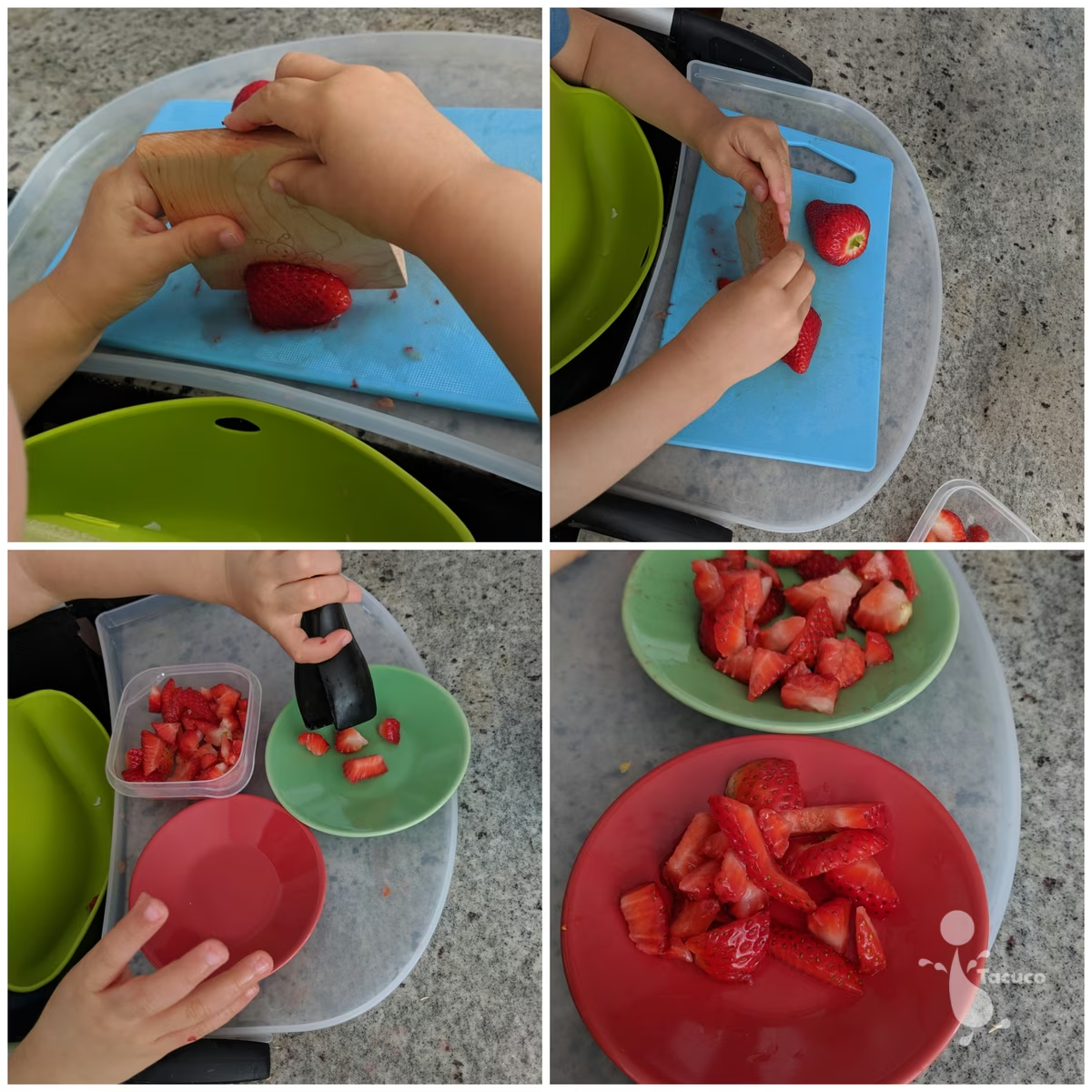
That is exactly where Montessori practical life activities enter the chat. And one afternoon, with a bowl of strawberries, a small wooden knife, and a pair of tongs, we stumbled into one of my favorite little kitchen lessons of all time.
The Montessori “Why” Behind Real Tools
One of the ideas I love most about Montessori is that children thrive when we hand them real tools sized for real hands, not plastic imitations. A wooden kids knife is not a toy that pretends to cut — it actually cuts (soft foods, at least). Tongs are not “practice tongs” — they are the same kind of tool an adult uses to plate dinner.
This concept is sometimes called structured risk: we do not remove all challenge from a child’s world, we scaffold it. We introduce the tool slowly, model how to use it, work alongside them for as long as they need, and gradually step back as their confidence grows.
The result is not just a kid who can chop strawberries. It is a kid who begins to believe: “I can do real things. I am capable.”
Meet the Wood Kids Knife
The star of this activity is a small wooden knife designed specifically for little hands. If you have never seen one, picture a chunky, handle-forward shape with a blunt edge and a slight bevel — sharp enough to slice through a strawberry with gentle pressure, but not sharp enough to cut skin.
Here is what makes it such a powerhouse Montessori tool:
- Hand strength. Pressing down through fruit builds the small muscles of the palm and forearm — the same muscles they will eventually need to hold a pencil for long stretches.
- Bilateral coordination. One hand stabilizes the fruit, the other hand chops. Both sides of the brain have to talk to each other and take turns leading. This is huge for reading and writing later on.
- Focus and sequencing. Chopping is naturally rhythmic and repetitive. Kids get into a groove and stay there. You will be surprised how long a toddler can concentrate on a bowl of strawberries.
- Confidence. The wooden knife looks like a “real” knife. Kids know the difference between a toy and the real thing, and they feel proud of the real thing.
A note on knives: In Montessori, we never simply hand a child a tool and walk away. We introduce it, we sit next to them, we model slow motion, and we practice for weeks or months alongside them. The wooden knife is safe, but supervision is still non-negotiable.
The Underrated Hero: Tongs
If the wooden knife gets all the Instagram glory, tongs are the quiet workhorse of Montessori practical life. They almost never get the spotlight, and honestly? That is a crime.
Tongs are part of a whole family of Montessori exercises called transfer work — activities where a child moves objects from one container to another using a specific tool. The classic Montessori progression looks something like this:
- Hands → move objects using just fingers
- Spoon → scoop and transfer
- Tongs → squeeze and transfer
- Tweezers or chopsticks → refined pincer transfer
Each step is a little harder than the last, and each one builds toward the same long-term goal: a strong, controlled pincer grasp. The pincer grasp is the thumb-and-index-finger pinch we use to hold a pencil, thread a needle, button a shirt, or type on a keyboard. It is the quiet superpower behind almost every fine motor task in adult life.
When a toddler squeezes a pair of tongs to pick up a strawberry chunk, they are:
- Strengthening the exact muscles needed for future handwriting
- Practicing hand-eye coordination (aim, grip, lift, release)
- Refining wrist rotation and control
- Building patience — because tongs are slow and things fall off
The Activity, Step by Step
Here is exactly what we did that afternoon, and what you can do too.
What you need
- A small cutting board (a non-slip mat underneath is a bonus)
- A wooden kids knife
- A pair of child-sized tongs (silicone-tipped ones grip best)
- 2–3 small plates or bowls in different colors
- A handful of ripe strawberries (soft fruit is the easy-mode starting point)
Step 1: Set the scene
Sit down at the same level as your child. Place all the tools in front of them, from left to right — this small detail is a Montessori habit that quietly prepares kids for the direction of reading and writing.
Before they touch anything, model the whole sequence once, slowly, without talking too much. Montessori teachers call this “showing, not telling.” Words distract; hands teach.
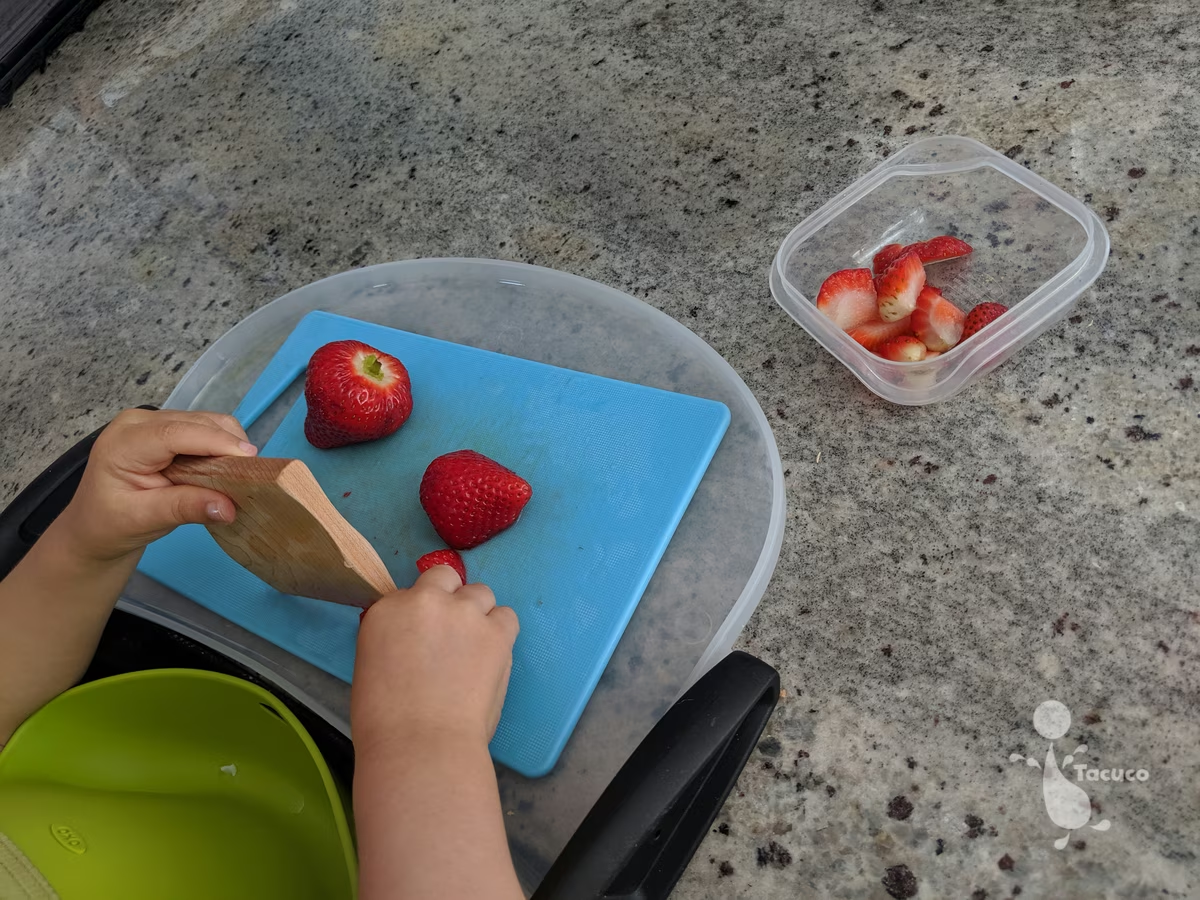
Step 2: Chop the strawberries
Hold the strawberry steady with one hand. Press down with the wooden knife using the other. Move slowly. If the fruit rolls, help them turn it flat-side down.
Some strawberries will get squished. Some will end up in one giant piece. Some will vanish into your child’s mouth. This is all fine. The goal is the process, not perfect little cubes.
Step 3: Transfer with the tongs
This is the part I did not expect to love as much as I did. Once the strawberries were chopped, we set out two colored plates — one green, one red — and I asked my little one to move the pieces from the cutting board onto the plates using the tongs.
Watching a toddler squeeze tongs for the first time is genuinely funny. The tongs slip, the strawberry launches, they laugh, they try again. And every single one of those “failures” is the exact muscle work their hand needs.
“The hand is the instrument of the mind.” — Maria Montessori. Nowhere is this more visible than in a two-year-old wrestling with a pair of tongs.
Skills Being Built (While They Just Think They Are Snacking)
Here is the wild part. In about fifteen minutes of “just” preparing a snack, a toddler is quietly practicing:
| Skill | What it looks like here |
|---|---|
| Hand-eye coordination | Lining up the knife, aiming the tongs |
| Fine motor / pincer grasp | Squeezing tongs, gripping the knife handle |
| Bilateral coordination | One hand holds, the other cuts |
| Sequencing | Chop → transfer → serve, in that order |
| Concentration | Staying with a task from start to finish |
| Independence | Preparing food for themselves and others |
| Sensory input | Smell, texture, temperature, color of the fruit |
Not bad for a bowl of strawberries.
A Little Bilingual Bonus
We speak Spanish at home and English outside, so cooking together is a natural place for us to weave both languages in without any pressure. During this activity, that might sound like:
- “¿Me pasas la fresa?” while pointing to the strawberry
- “Now we cut — cortar”
- “Squeeze the tongs — aprieta las pinzas”
Kitchen vocabulary is concrete, hands-on, and repeated dozens of times in a single activity. It is one of the easiest places to sneak in a second language, because your child is doing the word at the same moment they hear it.
Common Concerns
“Is it really safe?” With a proper wooden kids knife and full supervision, yes. Start with soft foods only. Never leave a toddler alone with any kind of tool.
“What if my child loses interest halfway through?” That is okay. In Montessori, we follow the child. If they cut two strawberries and walk away, those were two great strawberries. Come back to the activity another day. Their attention span will grow with practice.
“What if they make a huge mess?” They will. This is part of the deal. A small tray or a placemat catches most of it, and cleanup can become part of the activity too (wiping the tray with a little sponge is a whole Montessori exercise in itself).
Never skip the modeling step. Toddlers learn by watching more than by listening. Slow, silent demonstration is doing more teaching than any instruction you can give.
The Real Magic
The best part of this activity was not the chopped strawberries. It was the moment my little one carried the little colored plate over, set it down on the table, and beamed. They had made a snack. Real work. Real food. Real pride.
That is the whole promise of Montessori practical life work in one small moment. We give children real tools. We trust them with real tasks. And in return, they show us who they are becoming — capable, focused, and quietly, beautifully independent.
Have you tried a wooden kids knife or tong transfer work with your little one yet? What food did you start with? I would love to hear how it went in the comments.